
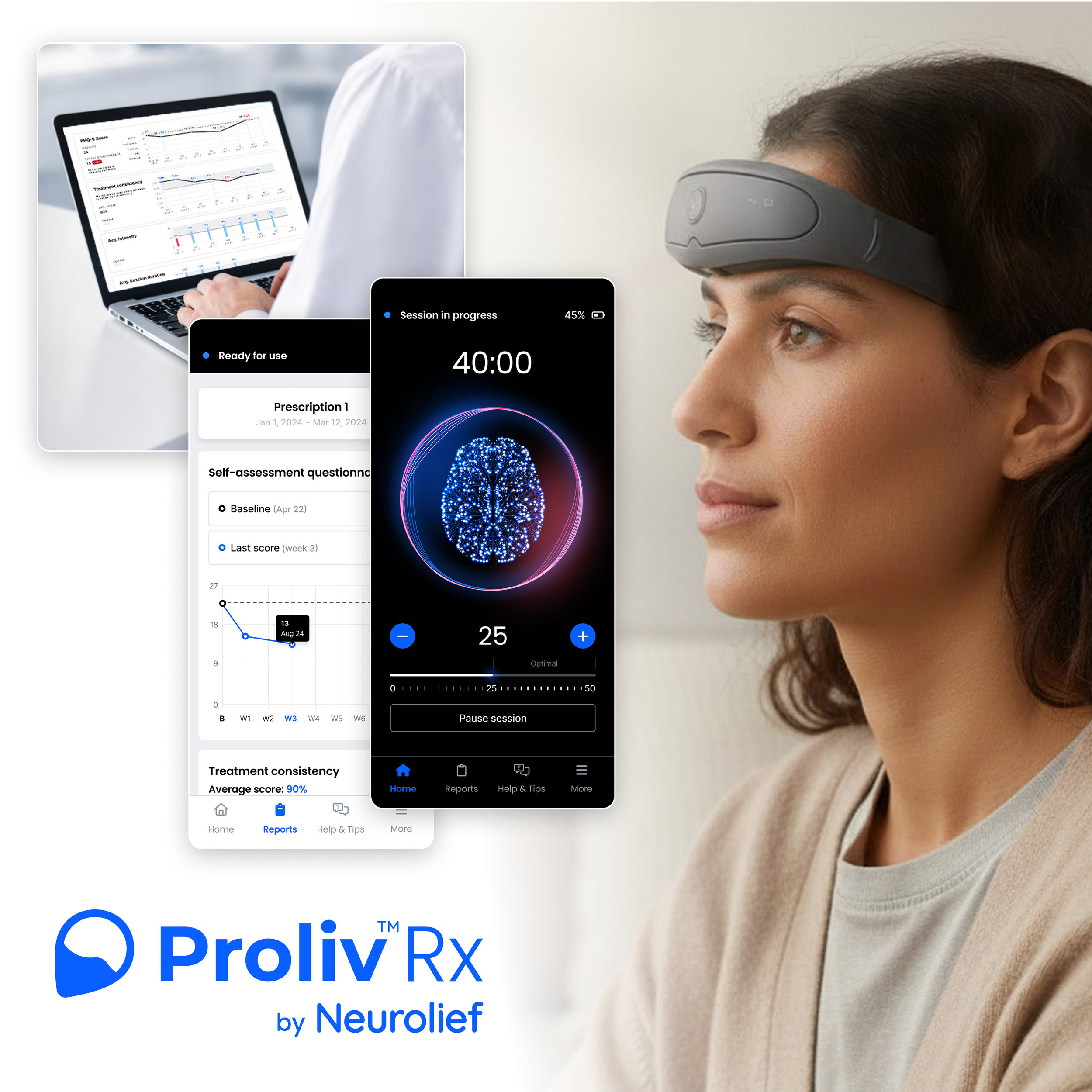
Dr. Henschel is an Authorized Prescriber of this new FDA-approved at home Brain Neuromodulation Device for Unipolar Treatment-Resistant Depression.
The device utilizes gentle currents to stimulate afferent cranial nerves in the brain which then signal the limbic system through the brain stem to increase neurotransmitter release (Serotonin, Norepinephrine, etc.) affecting mood.
It is the first device with this mechanism.
Treatment involves 30-40 min Sessions, Twice a day, 5-7 Days a Week for 8 Weeks, and up to 16 Weeks in some cases.
Sessions can be completed doing most activities (not driving or bathing).
Helps alongside medications. Only one failed prior medication trial to be eligible.
Completed at home with assistance with setup and monitoring. An App can be used to generate reports for your psychiatrist to review. There are regular visits with your psychiatrist to monitor progress.
Well tolerated with few side effects. The most common were headaches from a too-tight device or raising the stimulation too high.
Insurance may cover the treatments under a miscellaneous code. Neurolief will assist with requesting insurance coverage. One can also pay directly. Neurolief also offers zero interest financing.
Clinical evidence
The MOOD trial was a randomized, double-blind, sham-controlled study of 124 adults with major depressive disorder who hadn’t responded to antidepressants.
Key findings:
At 8 weeks, active treatment produced a statistically significant reduction in HDRS‑17 depression scores by 8.62 points vs 6.01 for sham.
Remission at 8 weeks: 21.3% (active) vs 6.0% (sham).
After 16 weeks of active treatment: 31.7% remission; 70.7% had substantial improvement.
Severe/very severe depression: 81% at baseline vs 15% after 16 weeks.
No patients had mild/ no depression at baseline; 56% did after 16 weeks. Indicating a significant drop in depression severity.
Treatment was well tolerated; adverse events were mostly mild and temporary. Compliance was 96%.
[1] https://www.sciencedirect.com/science/article/pii/S1935861X25003158